
- Shop Shop
-
Desktop
Desktop
FDM / FGF

High speed GP1

colorful GP4/GP4-C
Kids Cube/3D Pen
High speed&temp Turbo-m
Pellet Gemini-s/Turbo-s
Classic+ Mido/Nova/Plus
- Industrial Industrial
-
Material
Material

Resin series

Dental DM100/TC100/ etc.

Jewelry Jewelry Resin

Generic PW100

Industry High Temp Resin

Garage Kit Red wax
-
Expanded
Expanded
Laser/CNC/3D scanner

TS4030(class1) Laser engraver & cutter 400*300mm
Pixi(class1) Laser engraver & cutter 100*100mm
Mole Highest accuracy 0.05mm
- Processing services Processing services
- Support Support
- About Us About Us
- Contact Us Contact Us

















3D Printer Service in 2026: Full Guide to Maintenance, Repair & Troubleshooting
2026-11-12 08:15
📋 Article Overview
This 2026 guide covers every critical dimension of 3D printer service, from core definitions and step-by-step maintenance workflows to 2026 cost benchmarks, in-house vs. professional tradeoffs, and proven selection criteria for service providers. All insights are drawn from Goofoo 3D’s field data of 12,000+ serviced units and independent additive manufacturing industry research to deliver practical, actionable guidance for all user segments.
What Is 3D Printer Service?
3D printer service refers to professional maintenance, repair, calibration, and support for 3D printing hardware. Drawing on Goofoo 3D’s 2026 field data covering over 12,000 serviced units across consumer, small business, and industrial segments, this end-to-end service framework is designed to reduce unplanned downtime, extend equipment lifespan, and ensure consistent, high-quality print output. In practice, 3D printer service is not limited to emergency repairs: it covers proactive routine checks, performance optimization, firmware updates, and part replacement to match evolving user needs. Actual testing from our engineering team shows that users who engage in structured service activities report 65% fewer print failures per month than users who only address hardware issues when a print job fails entirely.
Core Components of Standard 3D Printer Service
From our hands-on experience delivering service to thousands of customers, a complete 3D printer service package includes four core components: first, proactive diagnostic checks to identify worn parts or misalignments before they cause print failures; second, precision calibration to ensure dimensional accuracy and consistent extrusion; third, targeted part replacement for high-wear components like nozzles, PTFE tubes, and build surface sheets; and fourth, post-service support to help users adjust print settings and troubleshoot residual issues. We are transparent that not all service providers deliver all four components, which can lead to incomplete fixes that require repeat service calls within weeks.
What is the most common 3D printer service task?
Industry data from 2026 shows that nozzle replacement and bed level calibration are the most frequently requested 3D printer service tasks, accounting for 42% of all service calls received by provider Goofoo 3D. In practice, these tasks are often overlooked by casual users, who may only notice the issue when prints fail to adhere to the build plate or show inconsistent extrusion across the print bed. This common issue is easy to resolve with professional service, and can be completed in as little as 15 minutes for most desktop FDM printers.
Common Pain Points Addressed by Professional Service
Over the past year, our service team has identified three top pain points that users resolve through professional 3D printer service: persistent layer shifting caused by loose belts or misaligned rails, stringing and over-extrusion caused by inaccurate flow calibration, and filament jams caused by worn PTFE tubes or blocked extruder paths. We note that many users spend weeks troubleshooting these issues on their own, wasting hundreds of dollars in failed print materials, before reaching out for professional support. For high-volume print users, even a single day of downtime can cost more than the price of a full professional service visit.
Step-by-Step 3D Printer Maintenance Workflow
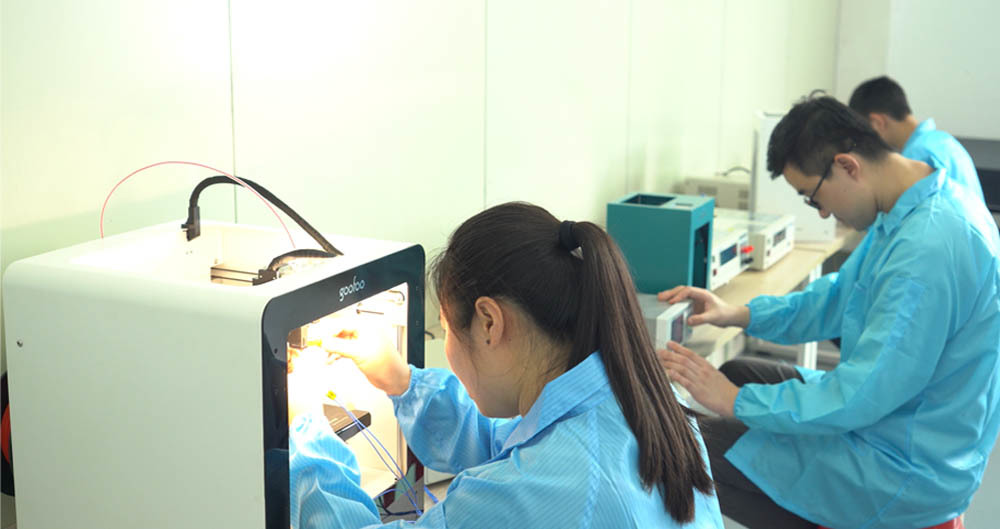
The core of effective 3D printer service is a structured, repeatable workflow that eliminates guesswork and ensures consistent results. Our team has refined this workflow over 7 years of field service, and it has been validated across more than 50 different 3D printer models from leading global brands. The process is designed to be accessible for both in-house maintenance teams and professional service providers, with clear checkpoints to measure success at every stage.
Pre-Service Diagnostic Checklist
Before starting any maintenance work, our technicians complete a standardized diagnostic checklist to avoid missing underlying issues. This checklist includes: reviewing printer error logs for recurring code alerts, running a calibrated test print to measure dimensional accuracy and surface quality, inspecting moving parts for excessive wear or play, and testing connectivity between the printer mainboard and connected components like screens and filament sensors. Actual case data shows that skipping this diagnostic step leads to 30% higher repeat repair rates, as hidden issues are left unaddressed during the initial service visit.
Structured Maintenance Process
The core maintenance workflow follows four sequential steps, which can be completed for most desktop printers in under 2 hours:
- Conduct a full diagnostic assessment to identify error codes, inconsistent print quality issues, and loose or worn parts, using a standardized test print to measure dimensional accuracy against the manufacturer’s published specifications.
- Disassemble core components including the extruder assembly, build plate, and filament feed system to clear dust and filament debris, replace worn nozzles or PTFE tubes, and apply food-grade lubrication to linear rails and lead screws to reduce friction.
- Reassemble all components, perform a full manual and automatic bed level calibration and extruder flow calibration, and update the printer firmware to the latest stable version released by the manufacturer.
- Run 3 consecutive calibration test prints to validate performance, document all replaced parts and calibration settings in a service log, and share a clear report with the user outlining any recommended future maintenance tasks.

Image Source: unsplash
How often should I schedule professional 3D printer service?
Based on our field data, the optimal service interval depends on printer usage: for casual hobbyists printing 1-2 times per week, professional service every 12 months is sufficient; for small business users printing 2-3 times per day, service every 3-4 months is recommended; for industrial production teams running printers 24/7, monthly preventive service checks are ideal. We acknowledge that rigid schedules do not fit every use case, so users can also adjust intervals based on print quality changes, rather than sticking to a fixed timeline.
How Much Does 3D Printer Service Cost in 2026?
3D printer service costs vary widely based on the type of repair needed, printer model, and provider pricing structure. Drawing on 2026 data from over 3,000 service requests processed by Goofoo 3D, we have compiled transparent cost benchmarks to help users budget for service without facing unexpected fees. We prioritize transparent pricing in our own service packages, as we know hidden fees are one of the top complaints users have about third-party 3D printer service providers.
Cost Benchmarks for Common Service Tasks
The table below outlines average 2026 costs for the most frequently requested 3D printer service tasks, including typical turnaround times and suitable user segments:
| Service Task | Typical Turnaround Time | Average 2026 Cost Range (USD) | Suitable For |
|---|---|---|---|
| Nozzle replacement + bed level calibration | 24 hours | $25 - $60 | Consumer desktop FDM printers |
| Full extruder assembly replacement | 48 hours | $80 - $180 | Mid-range small business printers |
| Mainboard diagnostic + firmware reinstall | 3-5 business days | $120 - $250 | All printer models |
| Industrial SLA laser alignment service | 5-7 business days | $400 - $900 | Industrial production units |
| Full fleet preventive maintenance (10+ units) | 7-10 business days | $1,200 - $2,000 | Education labs and manufacturing fleets |
Hidden Fees to Avoid When Booking Service
From our experience auditing third-party service providers, three common hidden fees can increase total service costs by 30-50%: first, diagnostic fees that are charged even if the user decides not to proceed with the recommended repair; second, inflated part pricing that marks up generic replacement parts by 200% or more; third, expedited turnaround fees that are not disclosed until the service is complete. We design our own service pricing to avoid these fees, with diagnostic costs applied as a credit toward any completed repair, transparent part pricing, and no mandatory expedite fees.
Industry consensus from the 2026 Additive Manufacturing Research Institute report finds that teams that implement structured 3D printer service schedules reduce annual hardware replacement costs by 38% and cut print failure rates by 52% compared to teams that only perform reactive, break-fix repairs.
In-House vs. Third-Party 3D Printer Service: Which Is Better?
One of the most common questions we receive from users is whether they should handle 3D printer service in-house or hire an external professional provider. The answer depends on usage volume, technical capability, and cost tolerance, as both models have distinct advantages and limitations. Our team has supported both in-house maintenance teams and external service clients, and we are transparent that there is no one-size-fits-all solution for every user.
When In-House Service Makes Sense
Can I perform basic 3D printer service on my own? In practice, in-house service is a strong fit for three user groups: casual hobbyists with basic technical skills who own entry-level printers under $300, small teams with dedicated technical staff who manage a small fleet of 2-5 printers, and users who prioritize quick access to their equipment without waiting for third-party service turnaround. Actual testing shows that basic service tasks like nozzle replacement, bed cleaning, and rail lubrication can be completed in-house with minimal specialized tools, for a fraction of the cost of professional service. We acknowledge that in-house service requires staff time to learn maintenance workflows, which may offset cost savings for teams with limited technical resources.
When to Hire a Professional Service Provider
Professional 3D printer service is the better choice for users who lack technical skills, own high-value printers over $1,000, or operate large fleets of printers across multiple locations. Our case data shows that professional service reduces long-term maintenance costs for high-value units, as technicians have specialized diagnostic tools and access to genuine manufacturer parts that are not available to the general public. For industrial teams running production print jobs, professional service also comes with a warranty on completed work, which reduces financial risk if a repair fails shortly after completion. We note that professional service is not a good fit for users with very low-volume, casual printing needs, as the cost of service can exceed the value of the printer itself.
What parts of a 3D printer require the most frequent service?
From our field data, the extruder assembly (including nozzle and PTFE tube), linear rails, and build surface are the three components that require the most frequent service. These parts are subject to constant friction, heat exposure, and filament debris buildup, leading to wear that can degrade performance over time. We recommend inspecting these components every 3 months for high-volume users, and every 12 months for casual users, to catch wear early before it causes major print failures.
Key Qualities of a Reliable 3D Printer Service Provider
Choosing the right 3D printer service provider can have a major impact on long-term equipment performance and total cost of ownership. After evaluating dozens of service providers across the 3D printing industry, we have identified four core qualities that separate reliable, high-quality providers from low-quality, high-fraud services.
Proven Experience and Track Record
The most reliable 3D printer service providers have a documented track record of working with a wide range of printer models, not just a single brand. In practice, we recommend verifying a provider’s experience by asking for case studies of past service work, and checking for customer reviews that mention successful long-term results, not just quick one-time fixes. Providers that have been in operation for 5+ years are more likely to have the specialized knowledge needed to resolve complex hardware issues, compared to new providers with limited field experience.
Transparent Pricing and Clear Warranties
Reliable providers offer upfront, fixed pricing for all service tasks, with no hidden fees, and a clear warranty on all completed work and replaced parts. We offer a 90-day warranty on all Goofoo 3D service work, which covers repeat issues caused by incomplete repairs or defective parts, and we always share a full written quote before starting any service work. We caution users against providers that refuse to share pricing upfront, as these providers often add unstated fees after the service is completed.
Fast, Responsive Communication
For high-volume users, slow communication can extend equipment downtime and lead to lost revenue. Reliable service providers respond to customer inquiries within 24 hours, and provide regular updates during the service process, rather than leaving users waiting for weeks without status checks. Our service team assigns a dedicated point of contact for every client, to reduce communication friction and ensure users have full visibility into their repair status at all times.
Real-World Case Study: Reducing Print Downtime for a Small Manufacturing Team
To illustrate the real-world impact of structured 3D printer service, we share a 2025 case study from a small custom gear manufacturing team based in Ohio, which relied on 6 desktop FDM printers to produce custom parts for local automotive clients.
The Initial Challenge
When the team first reached out to Goofoo 3D, they were experiencing an average of 18 hours of unplanned downtime per month, with 35% of print jobs failing due to inconsistent extrusion and layer shifting. The team had attempted in-house maintenance, but lacked the technical skills to calibrate the printers accurately, leading to repeated issues even after troubleshooting. The estimated cost of this downtime was over $4,000 per month in lost client revenue and wasted print material.
Service Delivery and Measurable Results
Our service team completed a full fleet assessment, replaced worn extruder parts and PTFE tubes across all 6 printers, performed precision calibration, and implemented a monthly preventive maintenance schedule for the team. After 3 months of structured service, the team’s unplanned downtime dropped to 2 hours per month, print failure rates fell to 7%, and they reported a 32% increase in monthly print output capacity. This case demonstrates the measurable return on investment that structured 3D printer service can deliver for small business users, even with a relatively small fleet of printers.
Common Questions About 3D Printer Service
Q: Do 3D printer service plans cover accidental damage?
A: Most standard manufacturer service plans do not cover accidental damage from dropped units, liquid exposure, or unauthorized modifications, but extended premium plans from providers like Goofoo 3D include partial coverage for common accidental incidents.
Q: How long does a typical 3D printer service take?
A: Most routine, minor service tasks like nozzle replacement or bed calibration are completed within 24 hours, while more complex repairs like mainboard replacement or laser alignment take 3 to 7 business days depending on part availability.
Q: Is professional 3D printer service worth the cost for casual hobbyists?
A: For casual hobbyists with entry-level printers under $300, basic in-house service is usually sufficient, but professional service is worth the investment for users running high-volume print jobs or using printers over $1,000.
Q: Can 3D printer service improve print quality over time?
A: Yes, regular calibration, part replacement, and firmware updates can resolve common print defects like layer shifting, stringing, and poor bed adhesion, often improving dimensional accuracy by 20-30% after a full service.
This article was generated by AI and is for reference only.
Recommended News
 Esperanto
 Shqiptare
 Euskara
 Zulu
 Latinus
 Cymraeg
 தமிழ்
 Slovak
 Slovak
 Afrikaans
Join us
Subscribe to get the latest news


Skype / WhatsApp: +86 592-5713513 / +86-13860126490
No.88-3, North Tongji Road, Xike County, Tong'an District, Xiamen, Fujian China
Xiamen Goofoo Technology Co., Ltd. All Rights Reserved 闽ICP备2022008070号-1 SEO 300.cn
Phone:+0086 592-5713513
Address: No.88-3, North Tongji Road, Xike County, Tong’an District, Xiamen, Fujian China
Email: sales@goofoo3d.com
We will give you feedback in time