
- Shop Shop
-
Desktop
Desktop
FDM / FGF

High speed GP1

colorful GP4/GP4-C
Kids Cube/3D Pen
High speed&temp Turbo-m
Pellet Gemini-s/Turbo-s
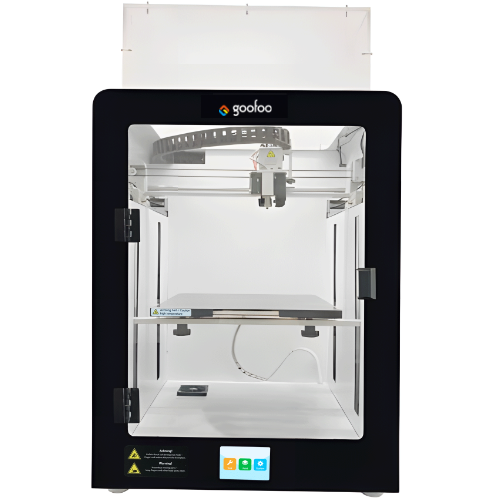
Classic+ Mido/Nova/Plus
- Industrial Industrial
-
Material
Material

Resin series

Dental DM100/TC100/ etc.

Jewelry Jewelry Resin

Generic PW100

Industry High Temp Resin

Garage Kit Red wax
-
Expanded
Expanded
Laser/CNC/3D scanner

TS4030(class1) Laser engraver & cutter 400*300mm
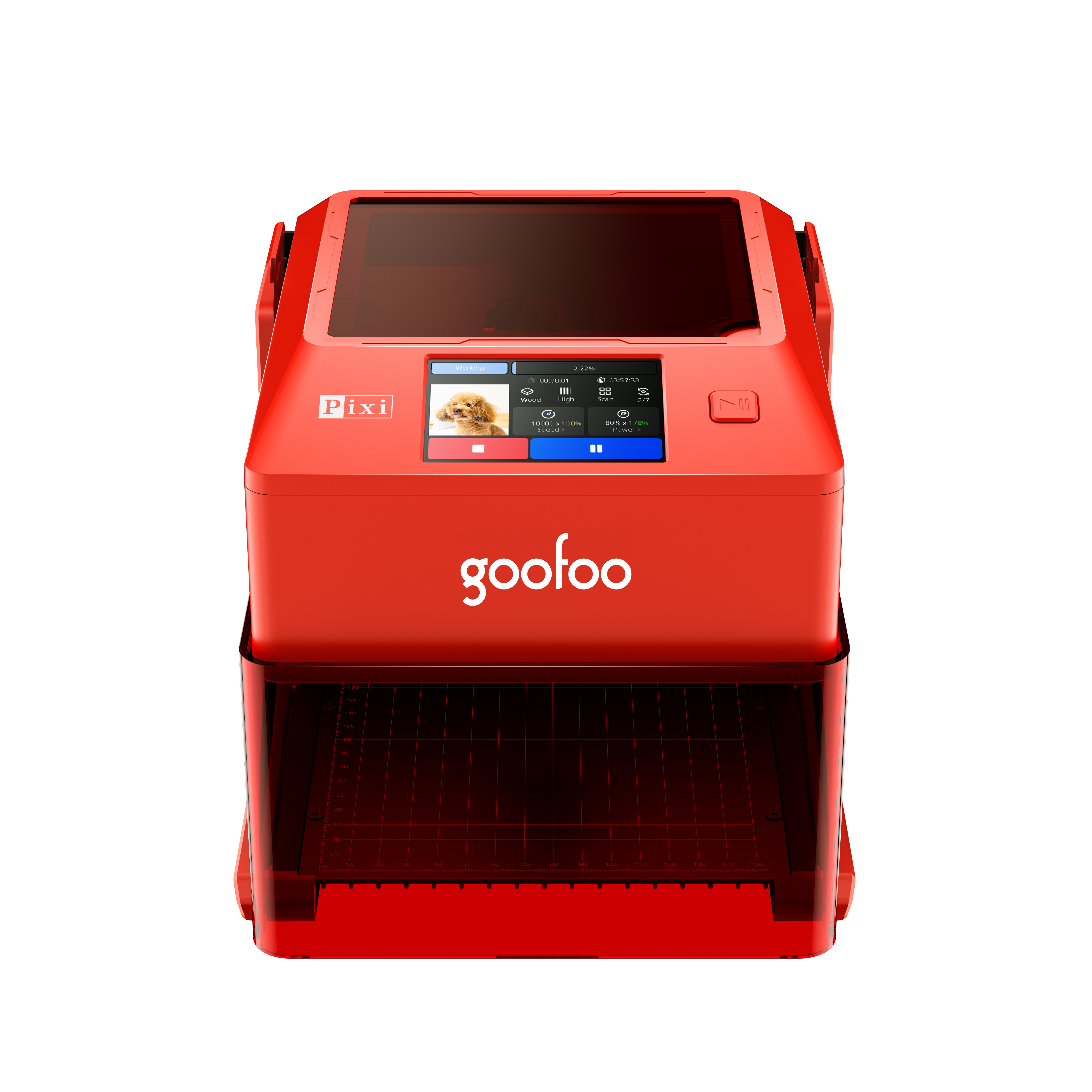
Pixi(class1) Laser engraver & cutter 100*100mm
Mole Highest accuracy 0.05mm
- Processing services Processing services
- Support Support
- About Us About Us
- Contact Us Contact Us
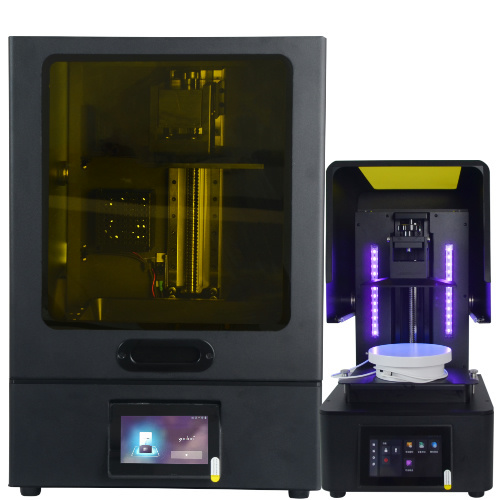


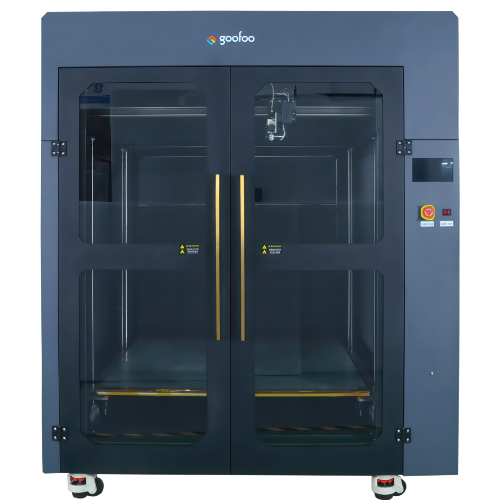


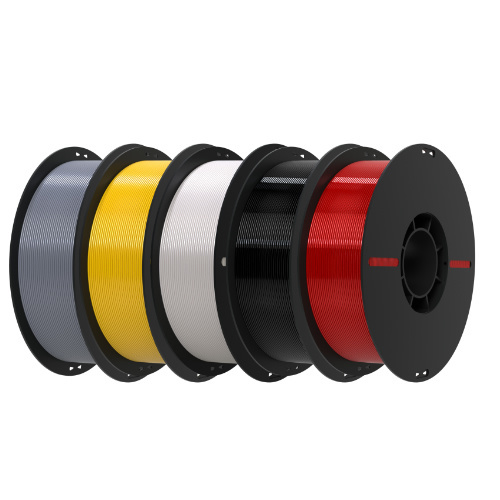
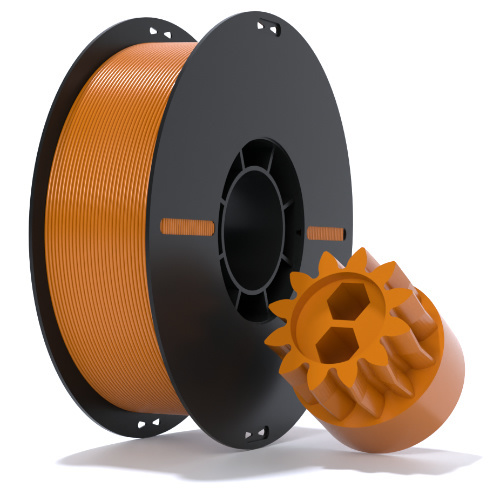
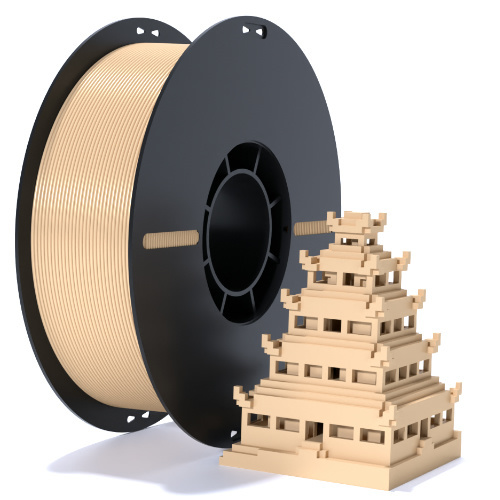
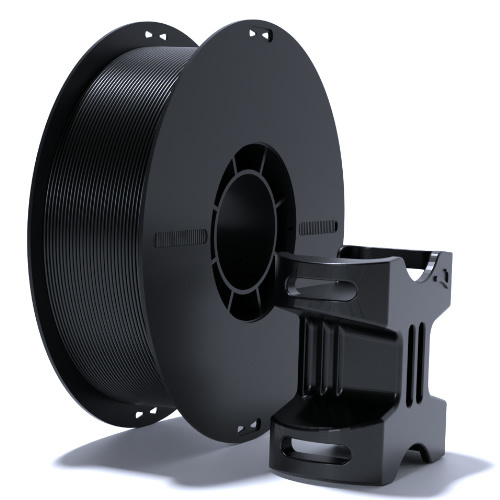
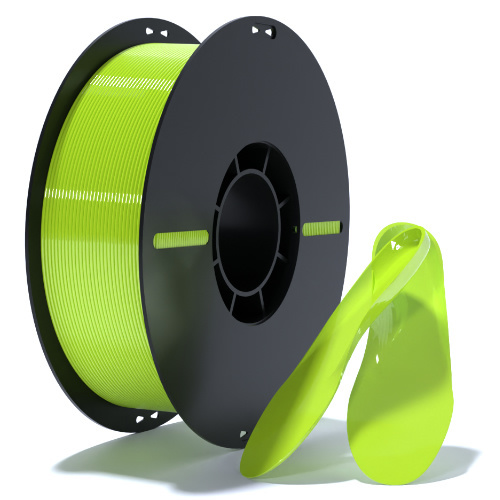




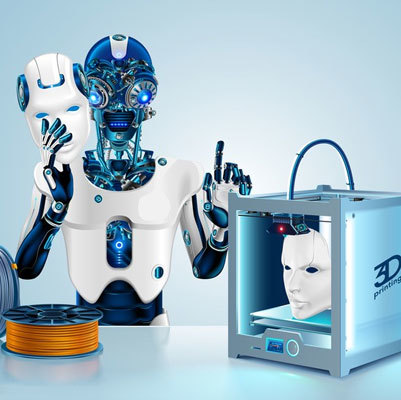





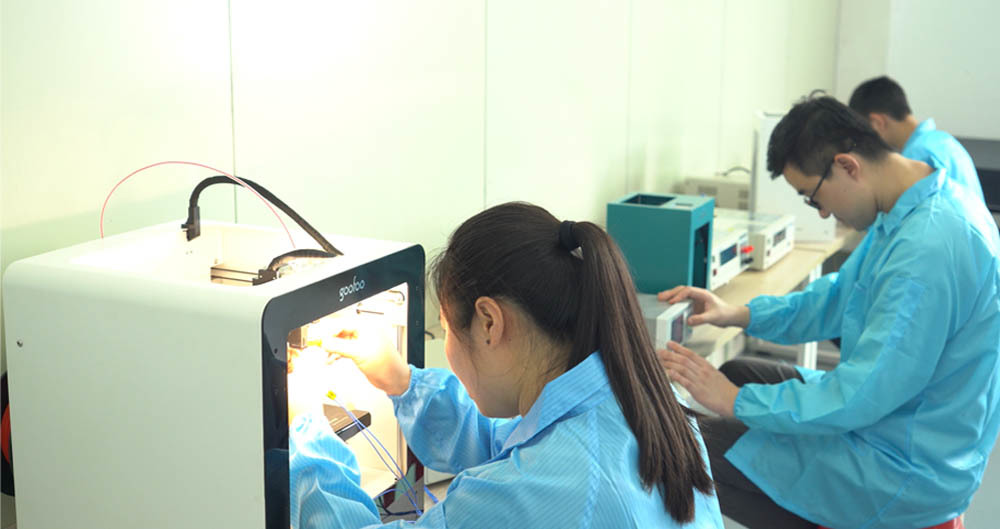




Research Report on PA-GF Model Printing with Goofoo Velo+ Industrial FDM 3D Printer (Abridged Version)
2026-06-29 13:50
Abstract
Glass fiber reinforced polyamide (PA-GF) is a high-demand additive manufacturing engineering material with excellent mechanical strength, heat resistance and chemical stability, but its widespread adoption in small and medium-sized manufacturing enterprises is long restricted by the high cost of professional industrial 3D printers and high technical threshold for stable printing. This report verifies that the Goofoo Velo+ FDM 3D printer can stably output PA-GF printed parts with over 90% of the tensile strength of injection-molded counterparts and dimensional tolerance within ±0.15mm, making it a highly cost-effective industrial PA-GF printing solution.
1. Introduction
PA-GF effectively solves pure nylon's inherent defects including low modulus, poor heat resistance and stress deformation: 20% short glass fiber reinforced PA-GF has 120% higher tensile strength, 200% higher flexural modulus than ordinary PA6, with thermal deformation temperature raised from 65℃ to over 210℃. Stable PA-GF printing has long been a major pain point for consumer-grade and entry-level industrial printers, which are prone to cause warping, nozzle wear, layer shifting and other defects, while existing full-heating chamber industrial printers on the market are too expensive for SMEs. As a new generation large-format industrial FDM 3D printer with 600500600mm super-large build volume, fully enclosed constant temperature chamber and hardened wear-resistant motion system, Goofoo Velo+ is specially optimized for PA-GF printing, and this research systematically evaluates its full-process performance.
2. Core Hardware Advantages
First, its fully enclosed constant temperature chamber maintains 70-90℃ stable ambient temperature with multi-point circulating heating, and the temperature difference across the full 600500600mm printing space does not exceed ±3℃, which fundamentally suppresses the warping and edge-lifting defects of large-size PA-GF parts. Second, it is equipped with a hardened steel nozzle with service life over 50kg for PA-GF printing (10 times longer than ordinary brass nozzles) and a high-rigidity all-metal motion system, which maintains extremely high positioning accuracy even at 150mm/s high moving speed and completely avoids the layer shifting problem. Third, the built-in 70℃ constant temperature filament drying chamber keeps PA-GF filament moisture content stably below 0.05%, eliminating hydrolysis bubbles and ensuring high interlayer bonding strength of printed parts.
3. Standardized Printing Workflow
Preprocessing: Dry PA-GF filament at 80℃ for more than 6h in advance, preheat the nozzle to 290℃ and the hot bed to 90℃, apply a layer of PVA glue on the PEI printing platform, set slicing parameters as 0.2mm layer height, 80mm/s printing speed, 100% infill for structural parts, and turn off the part cooling fan completely. Printing process: The printer automatically maintains 80℃ chamber temperature, and automatically adds a slow cooling annealing stage after printing for parts with height over 300mm to fully release internal stress and prevent post-demoulding cracking. Post-processing: Remove support with ordinary pliers, polish burrs with 400-mesh sandpaper, and apply simple epoxy sealing treatment for parts requiring high airtightness.
4. Performance Test and Industrial Application Verification
Tests conducted in accordance with ASTM standards show that Goofoo Velo+ printed PA-GF parts have average 72MPa tensile strength, 98MPa flexural strength and 5200MPa flexural modulus, with tensile strength 28% higher than parts printed by ordinary industrial printers, and the maximum dimensional deviation of 200mm200mm200mm standard sample is only 0.12mm. In actual industrial case, an automotive aftermarket enterprise printed a 420mm180mm150mm PA-GF air intake manifold prototype in 11h, which passed 72h continuous operation test under 120℃ and 0.3MPa air pressure, cutting the production cycle by 70% and production cost by 65% compared with traditional CNC machining.
5. Conclusion
Goofoo Velo+ breaks the traditional situation that high-quality PA-GF printing can only rely on expensive top-level industrial printers, providing SMEs with a 600-liter super-large printing space to obtain PA-GF parts with mechanical properties close to injection molding at very low use cost, which will become a core equipment to promote the large-scale popularization of PA-GF 3D printing in industrial scenarios.
Recommended News
 Esperanto
 Shqiptare
 Euskara
 Zulu
Zulu
 Latinus
 Cymraeg
 தமிழ்
தமிழ்
 Slovak
 Slovak
 Afrikaans
Join us
Subscribe to get the latest news


Skype / WhatsApp: +86 592-5713513 / +86-13860126490
No.88-3, North Tongji Road, Xike County, Tong'an District, Xiamen, Fujian China
Xiamen Goofoo Technology Co., Ltd. All Rights Reserved 闽ICP备2022008070号-1 SEO 300.cn
Phone:+0086 592-5713513
Address: No.88-3, North Tongji Road, Xike County, Tong’an District, Xiamen, Fujian China
Email: sales@goofoo3d.com
We will give you feedback in time