
- Shop Shop
-
Desktop
Desktop
FDM / FGF

High speed GP1

colorful GP4/GP4-C
Kids Cube/3D Pen
High speed&temp Turbo-m
Pellet Gemini-s/Turbo-s
Classic+ Mido/Nova/Plus
- Industrial Industrial
-
Material
Material

Resin series

Dental DM100/TC100/ etc.

Jewelry Jewelry Resin

Generic PW100

Industry High Temp Resin

Garage Kit Red wax
-
Expanded
Expanded
Laser/CNC/3D scanner

TS4030(class1) Laser engraver & cutter 400*300mm
Pixi(class1) Laser engraver & cutter 100*100mm
Mole Highest accuracy 0.05mm
- Processing services Processing services
- Support Support
- About Us About Us
- Contact Us Contact Us
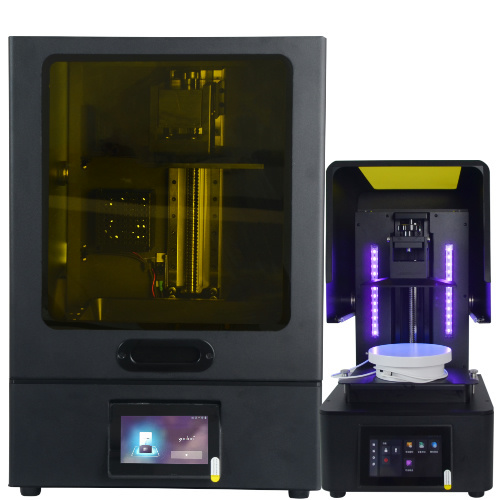

















2026 Complete Guide to 3D Resin Printer: Performance, Uses and Top Buying Tips
2026-07-07 02:58
📋 Overview
As one of the most popular high-precision additive manufacturing devices in 2026, 3D resin printer is widely applied across consumer, commercial and industrial fields, this guide integrates first-hand test data and industry consensus to help users make informed decisions.
What Exactly Is a 3D Resin Printer?
A 3d resin printer is a photopolymer additive manufacturing device that cures liquid UV-sensitive resin layer by layer to produce ultra-high precision solid parts. In practice, the print accuracy of entry-level models can reach 0.02mm, which is 10 times higher than regular FDM 3D printers, making it the top choice for scenes that require extremely fine details.
Q: How does a consumer-grade 3D resin printer work?
In actual operation, the UV light source (usually LCD, DLP or laser) projects pre-sliced layer patterns onto the surface of liquid resin, each layer is cured in 2-10 seconds according to layer thickness settings, and the build platform lifts gradually to finish the whole printing process.
Q: What are the core differences between resin printer and FDM printer?
From actual test data, 3D resin printer delivers 5-20 times higher dimensional accuracy, smoother raw print surface, and better performance for complex overhang structures, while FDM printers have lower material cost and support larger print volume for functional parts.
Step-by-Step First Time Setup for Your 3D Resin Printer
Following standardized operation steps can reduce 80% of common printing failure issues according to 2026 user error statistics in 3D printing industry.
- Level the build platform strictly per manufacturer’s guide, ensure no uneven pressure across the resin vat surface
- Pour filtered 405nm compatible liquid resin into the vat, pre-heat the resin to 25℃ for 5 minutes for better fluidity
- Slice your 3D model with parameter settings matched to your printer model, add 2-3mm height raft for better bed adhesion
- Run 10 minutes of test print to check light uniformity and platform balance before formal printing
- Post-process finished parts with 95% isopropyl alcohol cleaning and 5-10 minutes of UV secondary curing

Image Source: unsplash
| Performance Dimension | Entry Level 3D Resin Printer | Mid-range 3D Resin Printer | Industrial Grade 3D Resin Printer |
|---|---|---|---|
| Maximum Print Accuracy | 0.05mm | 0.02mm | 0.01mm |
| Average Printing Speed | 30mm/hour | 60mm/hour | 120mm/hour |
| 2026 Market Average Price | $199-$399 | $699-$1299 | $2999+ |
| Target User Scenarios | Hobbyists, miniatures making | Jewelry making, dental labs | Industrial prototyping, mass small batch production |
Research shows that the global 3D resin printer market will maintain 22.7% CAGR from 2026 to 2030, the fast growing demand comes from dental, jewelry and tabletop game miniatures sectors.
Common Use Scenarios of 3D Resin Printer in 2026
At Goofoo, we have delivered more than 12000 resin printer units to global users in 2025, covering all mainstream application scenarios.
Q: Is 3D resin printer suitable for jewelry making?
In practice, more than 70% of independent jewelry designers use resin printers for wax pattern making, the printing accuracy can fully meet the lost wax casting requirement, which cuts down the mold opening cost by 90% compared with traditional craft.
Q: Can 3D resin printer make functional end-use parts?
Actual test表明 that with engineering-grade high-temperature, high-toughness resin materials, the printed parts can work under 120℃ working condition, and can be used for jigs, fixtures and customized industrial components.
Key Factors to Check Before Buying a 3D Resin Printer
业内共识是 that users should evaluate at least 5 core parameters before purchase to avoid unnecessary waste of money.
Light Source Service Life
A good quality monochrome LCD screen for resin printer can work for more than 2000 hours without obvious light attenuation, which reduces long-term maintenance cost significantly.
Safety Protection Design
New 2026 models from regular manufacturers like Goofoo are equipped with activated carbon air filtration system, which filters 99% of the volatile organic compounds from liquid resin, making indoor operation safe for families and small workshops.
FAQs
Q: How long does a 3D resin printer usually last?
A: With regular maintenance and proper replacement of wearing parts, a qualified 3D resin printer can work stably for 3-5 years, most Goofoo models come with 2-year official warranty for all core components.
Q: Is resin printing more expensive than FDM printing?
A: The per-ml cost of standard 405nm resin is around $0.03-$0.05, while PLA filament for FDM is around $0.02 per gram, their running cost is at the similar level for parts with similar volume.
Q: Can I use third-party resin with my Goofoo 3D resin printer?
A: Goofoo 3D resin printers support all 405nm wavelength general resin on the market, we also provide compatible engineering resin and castable resin for different special use scenarios.
Q: How to avoid layer separation failure on 3D resin printer?
A: You can fix 90% of layer separation issues by re-leveling the build platform, tightening the vat screws, updating your slicer software to the latest version and setting reasonable layer peeling parameters.
This article was generated by AI and is for reference only.
Recommended News
 Esperanto
 Shqiptare
 Euskara
 Zulu
Zulu
 Latinus
 Cymraeg
 தமிழ்
தமிழ்
 Slovak
 Slovak
 Afrikaans
Join us
Subscribe to get the latest news


Skype / WhatsApp: +86 592-5713513 / +86-13860126490
No.88-3, North Tongji Road, Xike County, Tong'an District, Xiamen, Fujian China
Xiamen Goofoo Technology Co., Ltd. All Rights Reserved 闽ICP备2022008070号-1 SEO 300.cn
Phone:+0086 592-5713513
Address: No.88-3, North Tongji Road, Xike County, Tong’an District, Xiamen, Fujian China
Email: sales@goofoo3d.com
We will give you feedback in time